When people talk about atomic weapons, the terms nuclear bomb and hydrogen bomb are often used interchangeably. But scientifically and destructively, they represent two entirely different magnitudes of power. A standard nuclear bomb operates on the principle of nuclear fission, splitting heavy atoms like uranium or plutonium. A hydrogen bomb relies on nuclear fusion, merging lighter atoms like hydrogen isotopes at extreme temperatures. This fundamental physical distinction changes everything about how they are built, how they detonate, and the scale of destruction they cause.
Understanding the difference between these two devices requires looking past the common buzzwords and examining the actual mechanics of modern thermonuclear physics. While both weapon types unleash terrifying amounts of energy, the transition from fission to fusion created an entirely new tier of destructive capacity during the Cold War.
The Mechanics of Nuclear Fission: Atomic Bombs
Standard nuclear bombs, commonly known as atomic bombs or fission bombs, derive their energy from splitting the nucleus of a heavy, unstable atom into two or more smaller nuclei. This process is called nuclear fission.
When a free neutron strikes the nucleus of an atom like Uranium-235 or Plutonium-239, the nucleus absorbs the neutron and becomes unstable. It splits almost instantly, releasing an immense amount of binding energy, gamma rays, and two or three free neutrons. These newly released neutrons strike neighboring atoms, causing them to split as well. This creates a self-sustaining chain reaction that happens in a fraction of a microsecond.
Fission weapons have strict physical limits known as critical mass constraints. You can't scale them up indefinitely simply by adding more material, because the bomb tends to blow itself apart before all the fuel can react—a phenomenon known as a fizzle. Because of this, standard atomic bombs generally yield an explosive force equivalent to anywhere from a few kilotons to roughly 500 kilotons of TNT. The weapons dropped on Hiroshima and Nagasaki in 1945 were fission bombs, yielding roughly 15 kilotons and 21 kilotons respectively.
The Physics of Nuclear Fusion: Hydrogen Bombs
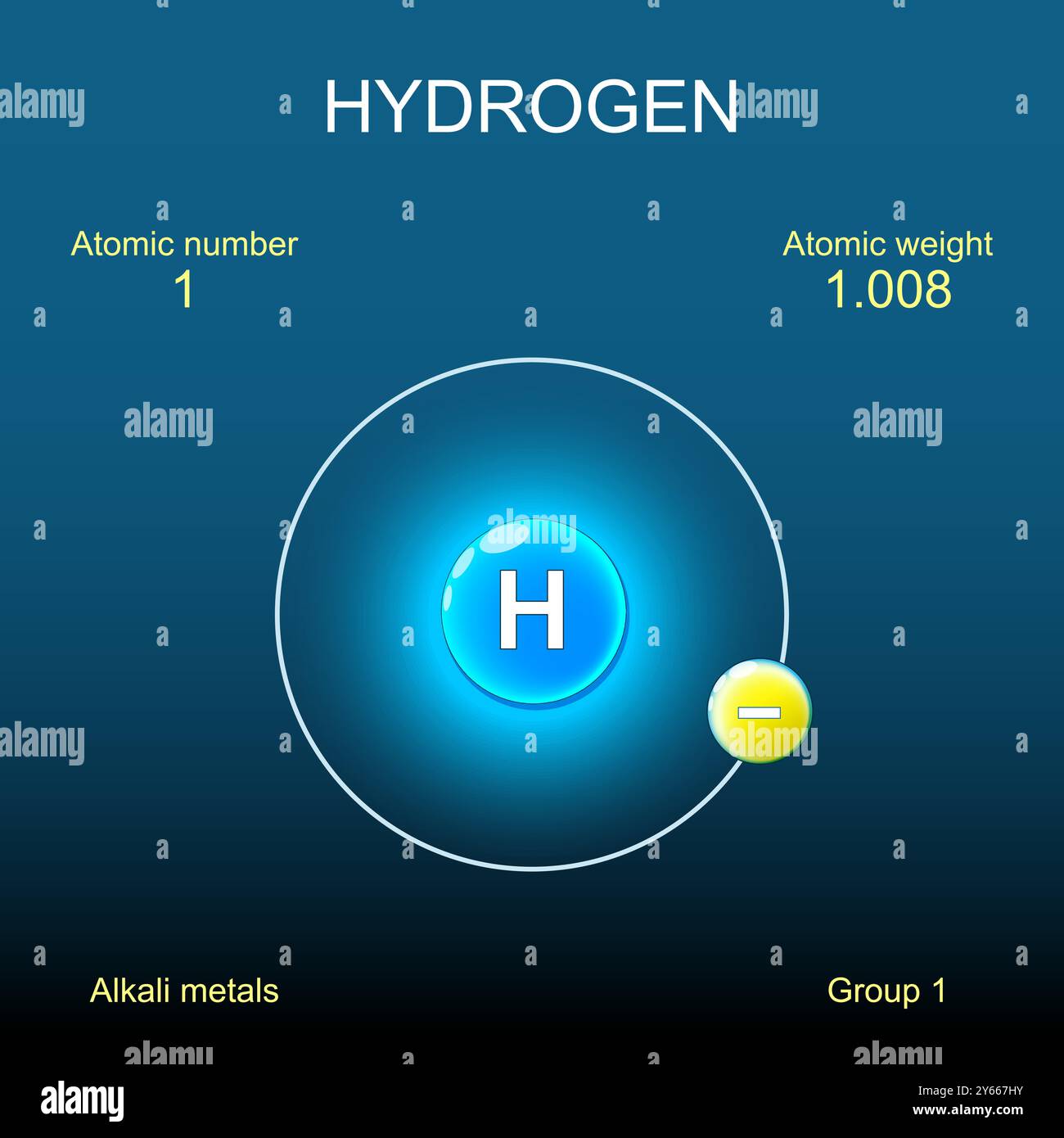
Hydrogen bombs, officially classified as thermonuclear weapons, use nuclear fission as a mere ignition switch. Instead of splitting heavy atoms apart, a hydrogen bomb forces light atomic nuclei—specifically isotopes of hydrogen known as deuterium and tritium—to fuse together into heavier helium nuclei.
Nuclear fusion is the exact same process that powers the sun and stars. Under normal conditions, positively charged atomic nuclei repel each other due to electrostatic forces. To overcome this repulsion and force them together, temperatures of tens of millions of degrees and immense pressure are required.
To achieve this on Earth, a thermonuclear weapon utilizes a two-stage design:
- The Primary Stage: A conventional fission bomb detonates inside the weapon, generating the initial heat, X-rays, and pressure required to trigger the secondary stage.
- The Secondary Stage: The energy from the primary stage compresses a capsule containing fusion fuel (such as lithium deuteride) surrounded by a heavy tamper. As the fuel compresses and heats to stellar temperatures, fusion ignites.
This fusion reaction floods the core with high-energy neutrons, which then trigger a final, massive fission explosion in a surrounding blanket of depleted uranium or natural uranium. The result is a multi-stage destructive cycle that multiplies the explosive yield exponentially.
Direct Comparison of Yield, Design, and Scale
The structural and operational differences between fission and fusion weapons dictate their role in military arsenals and geopolitical strategy.
Explosive Yield
- Nuclear (Fission) Bombs: Typically range from 1 kiloton to 500 kilotons of TNT equivalent.
- Hydrogen (Thermonuclear) Bombs: Typically range from 100 kilotons to 50 megatons or more. The largest device ever detonated, the Soviet Union's Tsar Bomba, yielded 50 megatons—roughly 3,800 times more powerful than the Hiroshima bomb.
Technological Complexity
- Nuclear Fission: Requires precise conventional explosives to compress sub-critical masses of uranium or plutonium into a supercritical core (implosion design) or shoot one piece of uranium into another (gun-type design).
- Thermonuclear Fusion: Requires advanced engineering, cryogenic or solid lithium deuteride fuel management, radiation channeling channels, and precise timing mechanisms to ensure the secondary stage compresses before the primary blast blows the assembly apart.
Strategic Deployment
Because of their staggering power-to-weight ratios, hydrogen bombs can be fitted onto Intercontinental Ballistic Missiles (ICBMs) and Submarine-Launched Ballistic Missiles (SLBMs), making them the backbone of modern strategic deterrence doctrines like mutually assured destruction.
Common Misconceptions About Nuclear and Hydrogen Weapons
Public discourse surrounding these weapons often leads to several persistent myths. Clearing these up helps clarify the actual mechanics of nuclear stockpiles.
- "Hydrogen bombs are just bigger atomic bombs." While colloquially true in terms of output, they use an entirely different physical reaction (fusion rather than purely fission) and a two-stage trigger system.
- "All modern nuclear weapons are pure fusion bombs." Even hydrogen bombs rely on nuclear fission for both their primary trigger and their final explosive stage. A pure fusion bomb without fission components does not exist in standard military arsenals.
- "Fallout is only an issue with hydrogen bombs." Both weapon types produce radioactive fallout. However, because hydrogen bombs have vastly larger yields and often use uranium tampers that undergo fast fission, their overall radioactive footprint and long-term environmental contamination are significantly more severe.
Frequently Asked Questions
Can a hydrogen bomb detonate without a nuclear fission trigger?
No. Creating the extreme temperatures and pressures required to force hydrogen isotopes to fuse together demands an immense burst of energy that can currently only be generated by detonating a nuclear fission bomb first.
Why didn't the US use a hydrogen bomb in World War II?
The hydrogen bomb had not been invented yet during World War II. The Manhattan Project focused exclusively on developing fission weapons. The United States did not successfully test the first thermonuclear device (codenamed Ivy Mike) until 1952, seven years after the end of the war.
Which nations currently possess hydrogen bombs?
According to assessments by the Federation of American Scientists, the nations with confirmed thermonuclear weapons in their military stockpiles include the United States, Russia, China, the United Kingdom, and France. Other nuclear-armed states, such as India, Pakistan, and North Korea, have developed nuclear capabilities, though their proficiency with true two-stage thermonuclear designs varies.
How do radiation effects differ between the two?
While both weapon types release intense initial gamma radiation and neutron flux, hydrogen bombs disperse radioactive fission products over a much wider geographic area due to their massive blast yields and the high-altitude dispersal of debris.



